
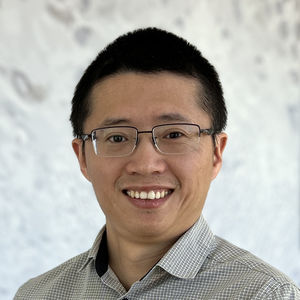
Qi Tan, PhD
Biography
Dr. Qi Tan is an Assistant Professor and Section Leader of Tissue Fibrosis and Regeneration at The Hormel Institute, University of Minnesota. His research career has centered on understanding how adult stem and progenitor cells interact with their tissue microenvironment to maintain homeostasis, how these interactions become disrupted during chronic disease, and how regenerative programs can be therapeutically restored. Dr. Tan received his PhD from The Chinese University of Hong Kong, where he studied tendon stem cells, stem-cell niches, and regenerative approaches for tendon and ligament repair. This work established his long-standing interest in the relationship between cellular identity, tissue environment, and regeneration. In 2014, he joined the laboratory of Dr. Daniel Tschumperlin at Mayo Clinic in Rochester, Minnesota, where he shifted his research focus to pulmonary fibrosis. His work incorporated multicellular lung organoids, primary lung cells, molecular approaches, and genetically engineered mouse models to investigate epithelial–mesenchymal interactions during lung injury and repair. Dr. Tan subsequently established an independent research program at Mayo Clinic and received NIH funding to investigate the role of CEBPA in lung fibrosis. This work helped establish loss of cellular identity as a key mechanism connecting epithelial dysfunction and impaired tissue homeostasis with persistent lung fibrosis. In 2023, Dr. Tan joined The Hormel Institute, University of Minnesota, where he leads the Tissue Fibrosis and Regeneration research program. The Tan Laboratory now investigates how cellular identity, epigenetic memory, metabolic stress, hypoxia, DAMP signaling, and epithelial–mesenchymal interactions converge to determine whether injured lung tissue successfully regenerates or progresses toward fibrosis. By combining mechanistic discovery with human organoid systems, genomic technologies, genetic models, and therapeutic intervention, the laboratory seeks to identify new approaches for reprogramming pathological cell states and restoring endogenous lung regeneration.
Education and Training
- Postdoctoral Fellowship, Pulmonary Fibrosis and Lung Regeneration
Mayo Clinic, Rochester, Minnesota
2014–2019 - PhD, Stem Cells and Tissue Regeneration
The Chinese University of Hong Kong
2010–2014 - MS, Genetics
Shanghai Jiao Tong University
2006–2009 - BS, Biological Sciences
Hunan Normal University
2002–2006
Awards
- 2022 — AJRCMB Junior Investigator Award
- 2021 — American Lung Association Catalyst Award
- 2018 — American Thoracic Society Abstract Scholarship
- 2015–2017 — Training & Career Development Award in Regenerative Medicine and Science, Mayo Clinic
- 2015 — Vermont Stem Cell Conference Travel Award
Research Program
1. Cellular Identity and Epigenetic Memory
We investigate how injury and chronic stress disrupt the transcriptional and epigenetic programs that maintain normal lung cell identity. A major focus is how CEBPA, hypoxia, and chromatin remodeling regulate alveolar type 2 (AT2) cell identity and whether transient stress can create persistent cellular memory that prevents normal regeneration. Our goal is to determine whether these maladaptive states can be reversed by restoring lineage-defining transcriptional and epigenetic programs.
2. Pathological Tissue Niches and Epithelial–Mesenchymal Interactions
Lung regeneration depends on communication between epithelial cells, fibroblasts, extracellular matrix, metabolites, and the local oxygen environment. We study how fibroblast activation, altered metabolism, hypoxia, and mechanical signals create a pathological niche that destabilizes AT2 identity and promotes fibrosis. By combining epithelial and fibroblast models, we aim to define how tissue-level stress becomes persistent regenerative failure.
3. DAMP–RAGE Signaling and Epithelial Stress
We investigate how persistent danger signaling converts tissue injury into abnormal epithelial states. Our recent work identified S100A2–RAGE signaling as a regulator of AT2 identity loss and pulmonary fibrosis. We are extending these studies to understand how DAMPs interact with oxidative, inflammatory, and metabolic stress to reinforce maladaptive cell states. These studies seek to identify therapeutically actionable pathways linking tissue damage to failed regeneration.
4. Regenerative Therapeutics
Our long-term goal is to move beyond slowing fibrosis and instead restore the regenerative capacity of the injured lung. We are developing therapeutic strategies that include:
- Small-molecule pathway inhibition
- Targeting DAMP–RAGE and hypoxia/HIF signaling
- Metabolic intervention
- CRISPR activation and epigenome editing
- Restoration of lineage-defining transcriptional programs
By integrating mechanistic discovery with therapeutic testing, we aim to reprogram pathological cell states, restore tissue homeostasis, and develop new regenerative therapies for pulmonary fibrosis.
Prfessional Memberships
- American Thoracic Society, Member, 2017–Present
Primary Research Areas
- Pulmonary fibrosis
- Alveolar epithelial regeneration
- AT2 cellular identity and plasticity
- Cellular and epigenetic memory
- Hypoxia and HIF signaling
- Cellular metabolism and tissue microenvironment
- DAMP and S100–RAGE signaling
- Epithelial–mesenchymal interactions
- Lung organoids and iPSC-derived alveolar cells
- Single-cell genomics and epigenomics
- CRISPR activation and epigenome editing
- Regenerative therapeutics
Selected Publications
Zhou C, Wellmerling JH, Bagherpoor AJ, Deng W, Tschumperlin DJ, Tan Q.
Targeting the S100A2–RAGE Pathway Restores AT2 Cell Identity and Mitigates Lung Fibrosis.
Am J Respir Cell Mol Biol. 2026 Aug 10:aanag133.
Gilbert RM, Jones DL, Wellmerling J, Caporarello N, Meridew JA, Choi KM, Haak AJ, Link PA, Tan Q, Lee JH, Ordog T, Ligresti G, Tschumperlin DJ.RUNX1 Is a Mediator of Fibrotic Activation and Epigenetic Memory in Lung Fibroblasts.
Am J Respir Cell Mol Biol. 2026;74:911–923.
Tan Q, Wellmerling JH, Dresler SR, Meridew JA, Choi KM, Song S, Li Y, YS Prakash YS, Tschumperlin DJ. Targeting C/EBPα to restore cellular identity and tissue homeostasis in pulmonary fibrosis. JCI Insight. 2024 Jul 16: e175290.
Wellmerling JH, Dresler SR, Meridew JA, Choi KM, Heek AJ, Tschumperlin DJ, Tan Q. RNA-sequencing reveals differential fibroblast responses to bleomycin and pneumonectomy. Physiol Rep. 2024 Jul;12(13): e16148.
Li Y, Prakash YS, Tan Q, Tschumperlin DJ. Defining signals that promote human alveolar type I differentiation. Am J Physiol Lung Cell Mol Physiol. 2024 Apr 1;326(4): L409-L418.
Tan Q, Link P, Meridew JA, Pham T, CaporarelloN, Ligresti G, Tschumperlin DJ. Spontaneous lung fibrosis resolution reveals novel anti-fibrotic regulators. Am J Respir Cell Mol Biol. 2021 Apr;64(4):453-464.
Liu W, Meridew JA, Aravamudhan A, Ligresti G, Tschumperlin DJ, Tan Q. Targeted regulation of fibroblast state by CRISPR-mediated CEBPA expression. Respir Res. 2019 Dec 11;20(1):281.
Tan Q, Ma XY, Liu W, Meridew JA, Jones DL, Haak AJ, Sicard D, Ligresti G, Tschumperlin DJ. Nascent Lung Organoids Reveal Epithelium- and BMP-Mediated Suppression of Fibroblast Activation. Am J Respir Cell Mol Biol. 2019 Nov;61(5):607-619.
Haak AJ, Kostallari E, Sicard D, Ligresti G, Choi KM, Caporarello N, Jones DL, Tan Q, Meridew J, Diaz Espinosa AM, Aravamudhan A, Maiers JL, Britt RD Jr, Roden AC, Pabelick CM, Prakash YS, Nouraie SM, Li X, Zhang Y, Kass DJ, Lagares D, Tager AM, Varelas X, Shah VH, Tschumperlin DJ. Selective YAP/TAZ inhibition in fibroblasts via dopamine receptor D1 agonism reverses fibrosis. Sci Transl Med. 2019 Oct 30;11(516).
Tan Q, Tschumperlin DJ. Epigenome Editing Enters the Arena. A New Tool to Reveal (and Reverse?) Pathologic Gene Regulation. Am J Respir Crit Care Med. 2018 Sep 1;198(5):549-551.
Haak AJ, Tan Q, Tschumperlin DJ. Matrix biomechanics and dynamics in pulmonary fibrosis. Matrix Biol. 2017 Dec 21.
Tan Q, Choi KM, Sicard D, Tschumperlin DJ. Human Airway Organoid Engineering as a Step Toward Lung Regeneration and Disease Modeling. Biomaterials. 2017 Jan;113: 118-132.
Complete List of Published Work
https://www.ncbi.nlm.nih.gov/myncbi/1hcHrPqSFb8ovz/bibliography/public/
Join the Tan Laboratory
We welcome motivated trainees and collaborators interested in lung regeneration, pulmonary fibrosis, cellular identity, organoids, epigenetics, hypoxia and metabolism, single-cell genomics, CRISPR, and regenerative therapeutics. Our laboratory integrates cell and molecular biology, genomics, computational analysis, organoid systems, and animal models to understand how pathological tissue environments disrupt cellular identity and to develop strategies that restore lung regeneration. Prospective postdoctoral fellows, graduate students, undergraduate researchers, and collaborators are encouraged to contact Dr. Tan.